
Deck tiles can make a sound, worn outdoor surface feel fresher and more comfortable, but they work best when the deck underneath is stable, level, dry, and safe. Before buying materials, inspect the structure, measure finished height, and compare a surface refresh with deck remodeling or custom construction.
We help Georgia homeowners think through that choice with a practical design question: will deck tiles solve the comfort problem, or does the outdoor space need a stronger foundation, better circulation, shade, or a new layout?
What should you check before buying deck tiles?

Before buying deck tiles, confirm that the existing deck has a clean, stable, reasonably level surface with open drainage and no active structural damage. Homeowners often research deck tiles because they want a faster way to refresh a worn, plain, or uncomfortable outdoor surface. Interlocking or floating tiles may improve the walking surface, but they cannot make an unsound deck safe.
Inspect the deck boards, joists, fasteners, stairs, railings, ledger connections, and transitions to the home. Look for movement, soft wood, corrosion, loose attachments, standing water, and areas where the surface slopes unexpectedly. A tile system also needs enough room around doors, gates, siding, and stair edges after its added height is included.
Use this short pre-purchase checklist:
Measure the full surface, edges, corners, stairs, and unusual shapes.
Check the finished height against door thresholds, siding, railings, and nearby patios.
Confirm that water can flow away and that gaps or drainage channels will remain open.
Consider how materials and tools will reach the deck and how old materials would leave the property.
Identify the surface beneath the tiles
Deck tiles need a sound base, whether that base is an existing wood deck, concrete, or another suitable outdoor surface. We recommend cleaning the area first, then checking for loose boards, raised fasteners, uneven joints, rot, and places where water collects. The surface should feel stable underfoot before any tile system is considered. A quick visual refresh cannot compensate for movement or deterioration below it.
Separate a cosmetic update from a construction problem
Deck tiles may fit a cosmetic update when the structure is sound and the main concern is appearance, texture, or walking comfort. A construction problem requires a different response when you find damaged framing, widespread rot, unsafe stairs, inadequate railings, or a layout that no longer suits how your household uses the space. Identifying that difference early helps prevent wasted material and an unfinished project.
Which deck tile installation limits can change the project scope?
Deck tile installation can become a broader remodeling project when the existing deck needs preparation, repair, demolition, disposal, or access work. Floating or interlocking tiles may cover a serviceable surface, but they cannot correct unsafe framing, rot, unstable boards, or poor load-bearing conditions. Those issues need attention before a new walking surface is installed.
Added height can also affect stair nosings, railing height, thresholds, gates, siding, and nearby doors. A tile surface that looks suitable in a product photo may create a trip point at the house or reduce the usable height of a railing. Stairs may need a carefully planned transition, and drainage must remain open rather than becoming trapped beneath the new surface.
Our verification checkpoint is simple: the surface is sound, drainage remains open, doors and stairs operate safely, and the finished height works with adjacent areas. If any of those checks fail, the project scope should be revised before materials are ordered.
Uneven boards, damaged framing, and poor drainage
Uneven boards can leave deck tiles rocking, separating, or wearing unevenly, while damaged framing can affect the safety of the entire deck. Poor drainage creates another concern because trapped moisture can speed deterioration beneath a covering. We recommend addressing the base condition first, even if that means replacing boards, correcting drainage, repairing framing, or choosing a complete deck remodeling plan.
Stairs, railings, doors, and height transitions
Stairs and doors need special attention because a small surface-height change can affect comfortable, safe movement. Check stair nosings, the first and last step, railing height, door swing, gates, and the transition to a patio or walkway. A successful installation leaves these features functional and visually connected rather than forcing an awkward step or blocked opening.
How do you compare deck tiles with a rebuilt or remodeled deck?
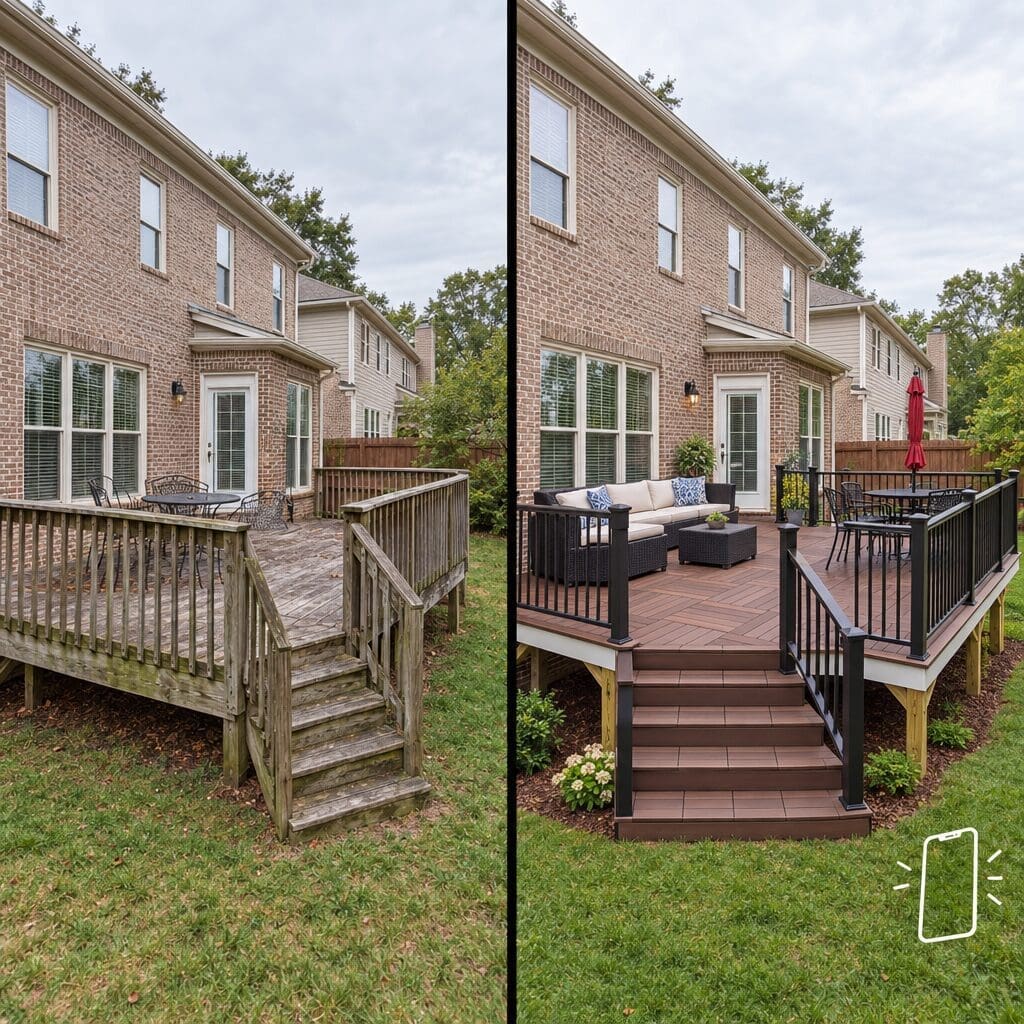
Choose deck tiles for a limited visual refresh when the existing structure is sound, the layout works, and the added height can be handled safely. Choose board replacement, composite decking, rebuilt framing, or a new deck when you need longer-term structural correction, a major appearance change, improved circulation, or more usable space.
Deck tiles can offer a practical way to change surface character without changing the entire footprint. Wood decking may support a familiar natural appearance, while composite decking can offer a different maintenance and design profile. The right comparison includes condition, appearance, expected upkeep, longevity, and how the space should function for meals, seating, play, or entertaining.
Widespread deterioration, awkward stairs, inadequate railings, poor flow, or a desire to expand the footprint usually point toward professional deck remodeling or custom construction. At Leisure Time Decks, our outdoor living work includes custom decks, deck remodeling, custom porches, pergolas, gazebos, retaining walls, and stone patios, so the discussion can address the complete space rather than one surface alone.
When a surface update may fit
A surface update may fit when the deck framing and boards are stable, the existing footprint is useful, and your goal is to improve the walking surface or refresh its appearance. It can also make sense when you do not need new stairs, expanded seating, shade structures, or changes to the home connection. We still recommend checking drainage, edge restraint, access, and finished height before choosing this route.
When custom construction makes more sense
Custom construction makes more sense when the deck no longer supports safe, comfortable use or when the layout limits what you want to do outdoors. A new or remodeled deck can address framing, stairs, railings, circulation, shade, and the relationship between seating, cooking, gardens, and the house. Pergolas, gazebos, porches, retaining walls, and stone patios may also help create a more complete outdoor living plan.
What details influence the cost of a deck tile or deck remodeling project?

A reliable project price depends on the existing surface, preparation, repairs, total area, access, stairs, railings, transitions, labor, and selected materials, not the tile price alone. Demolition, disposal, framing repairs, board replacement, surface leveling, and difficult access can all change the scope. Wood or composite decking choices can also affect appearance, maintenance, and total construction cost.
Use this sequence before requesting quotes:
Measure: Record surface area, edges, stairs, and height changes.
Inspect: Check boards, framing, drainage, fasteners, and attachments.
Define: Decide whether the goal is a surface refresh, remodeling, or a new outdoor space.
Compare: Review material, preparation, installation, repair, and disposal allowances.
Confirm: Ask how railings, doors, stairs, permits, and transitions will be handled.
Request a scope-based estimate instead of comparing product prices alone. Two projects with the same surface area may require very different preparation and repair work. A clear scope should explain what happens to the existing deck, how height changes are handled, and whether related features such as a porch, patio, or outdoor cooking area belong in the same design conversation.
Use this labeled comparison list before requesting quotes
Surface: Ask whether the existing base is suitable and what preparation it needs. Structure: Confirm how boards, joists, fasteners, stairs, and railings will be assessed. Access: Discuss material delivery, removal, and disposal. Finish: Compare wood, composite decking, or tile based on appearance and maintenance. Connections: Clarify doors, thresholds, drainage, and adjacent patios before approving a scope.
How can a professional consultation make the next step clearer?

A professional consultation can determine whether deck tiles are appropriate or whether custom construction will create a safer, more comfortable result. Prepare photos, approximate dimensions, problem areas, preferred colors or materials, intended uses, and a practical budget range. These details help the conversation focus on how you want to live outside, not only on which product covers the deck.
A consultation can address existing conditions, circulation, shade, privacy, material choices, and connections to outdoor kitchens, fireplaces, gardens, or patios. Leisure Time Decks is a Georgia-based option for homeowners seeking custom decks and outdoor living enhancements. The company is a State Licensed Contractor and has been in business for 30 years, according to the provided company information.
What to bring to the conversation
Bring wide and close-up photos of the deck, stairs, railings, house connection, and any areas where water collects or movement occurs. Approximate measurements, preferred materials, colors, furniture dimensions, and a list of intended activities can help our team understand the priorities. If you have a practical budget range, sharing it can help shape suitable options without assuming that a product-only solution is best.
How the design discussion can expand outdoor comfort
Outdoor comfort may depend on more than the walking surface. We can discuss shade, privacy, seating flow, cooking areas, fireplaces, gardens, and the transition between a deck and patio. A personalized design process helps determine whether deck tiles solve the immediate concern or whether a porch, pergola, outdoor kitchen, fireplace, or custom deck would better support the way you use the space.
Where can Georgia homeowners get help with deck upgrades?
Leisure Time Decks serves Georgia homeowners, including Lilburn and nearby communities, with listed service areas across Atlanta and North Georgia. These include Decatur, Buckhead, Sandy Springs, Roswell, Alpharetta, Johns Creek, Duluth, North Atlanta, Brookhaven, East Cobb, Peachtree Corners, Norcross, Suwanee, Cumming, Milton, and Dunwoody, as well as homeowners in Cobb, DeKalb, Forsyth, Fulton, and Gwinnett counties.
Availability for a particular address should be confirmed when you reach out. A useful next step is to describe the existing deck, explain the comfort or appearance problem, share photos if helpful, and discuss an on-site project assessment or design conversation. We can then compare deck tiles with remodeling, custom decks, porches, pergolas, patios, and connected outdoor features.
Service areas around Atlanta and North Georgia
Homeowners in Lilburn, Georgia, and communities such as Alpharetta, Cumming, Suwanee, Roswell, Duluth, and Sandy Springs can contact Leisure Time Decks about outdoor living improvements. The listed service area also includes neighborhoods and communities across the Atlanta region, including East Cobb, Brookhaven, Norcross, Peachtree Corners, Milton, and Dunwoody. Confirm coverage for your address before planning an assessment.
How to request a project discussion
Call Leisure Time Decks at (770) 758-6624 and describe your deck, the comfort problem, and the upgrades you are considering. You can ask about deck tiles, remodeling, porches, pergolas, patios, outdoor kitchens, fireplaces, or related features. We are happy to help you decide whether a surface refresh or a custom outdoor living plan fits. Contact Us – LT Decks
Frequently Asked Questions
Are deck tiles suitable for every existing deck?
No. Deck tiles generally require a stable, reasonably level, structurally sound base with appropriate drainage. Rot, loose boards, damaged framing, unsafe railings, stairs, or incompatible height transitions should be addressed before installation because tiles cannot correct those conditions.
How much does a deck tile or deck remodeling project cost?
The total depends on surface area, tile or decking material, preparation, repairs, stairs, railings, access, disposal, and project complexity. A site-specific scope is more useful than a product-only price, so we recommend requesting a detailed consultation that explains the work included.
What is included in a professional deck remodeling consultation?
A useful consultation can review the existing structure, design goals, material choices, dimensions, drainage, stairs, railings, transitions, and connections to other outdoor features. That review helps determine whether a surface update or a broader remodeling plan better supports safe, comfortable use.