
If your outdoor fireplace is ready for cooler evenings but the opening looks unfinished, worn, or difficult to use, fireplace doors may be part of the answer. The right choice depends on more than appearance: you also need to check the firebox, fuel system, ventilation, mounting surface, and exposure to Georgia weather.
What to check before ordering fireplace doors for an outdoor fireplace
Start by deciding whether you are replacing worn doors, adding doors to an existing outdoor fireplace, or planning doors as part of a new fire feature. Set aside a tape measure, flashlight, notepad or phone camera, and any fireplace documentation you have available. Allow about 30 to 45 minutes for the first review, and treat the task as moderately difficult because accurate measurements and condition checks affect compatibility.
Fireplace doors can give a firebox a more finished appearance and help organize the area around the opening. The correct option still depends on the fireplace design, fuel source, ventilation, mounting surface, and exposure to rain. A covered patio fireplace may face different moisture concerns than an open stone fireplace near a garden or deck.
A door update may be cosmetic when the masonry and frame are sound. Cracked masonry, altered ventilation, unstable mounting points, or an incompatible firebox call for professional review before you order anything. We recommend treating visible damage as a project-planning signal rather than covering it with a new finish.
How do you measure an outdoor fireplace opening accurately?
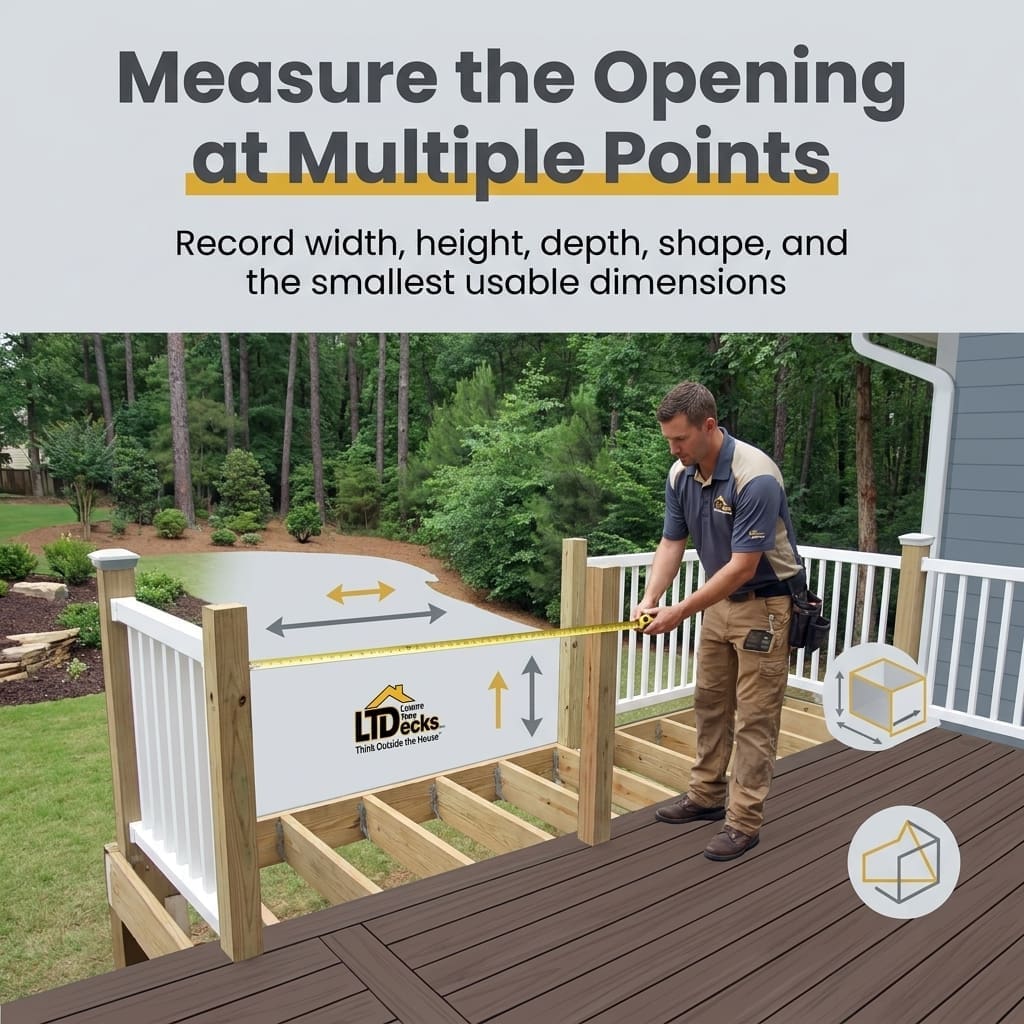
Measure the opening at several points and use the smallest usable dimensions when evaluating fireplace doors. A single measurement can miss a tapered, arched, corner-mounted, or irregular opening, especially on a custom stone fireplace.
- Measure width: Record the width at the top, middle, and bottom of the opening.
- Measure height: Record height at the left side, center, and right side.
- Record depth: Measure the firebox depth, front lip, reveal, and any surface where a frame or bracket may sit.
- Identify the limiting dimensions: Write down the smallest width and height, then compare them with the largest variation across the opening.
- Document existing hardware: Photograph hinges, brackets, screws, tracks, frames, and latch areas without drilling new holes or removing masonry.
- Add scale to photographs: Place a ruler or tape measure beside each side of the opening so the images show proportions clearly.
Your verification checkpoint is a measurement record that identifies the smallest opening dimension and shows whether the sides are reasonably consistent. The common pitfall is ordering from one measurement taken at one point, then discovering that the door frame meets a narrower section or an uneven stone edge.
Measure the opening and mounting area
Measure both the firebox opening and the surrounding mounting area because fireplace doors need enough usable surface for their frame or hardware. Check the front lip, side returns, depth, and any raised stone, mortar, or metal edge that could interfere with the fit. Record each dimension in the same units and label every photograph.
Record the shape, clearances, and mounting points
Identify whether the opening is square, arched, tapered, corner-mounted, or irregular before comparing door styles. Note clearances around the opening and document existing hinge, bracket, screw, and frame locations without modifying the masonry. A standard rectangular door may be unsuitable for a custom stone fireplace even when its overall width seems close.
Which fireplace condition and fuel checks should happen before installation?
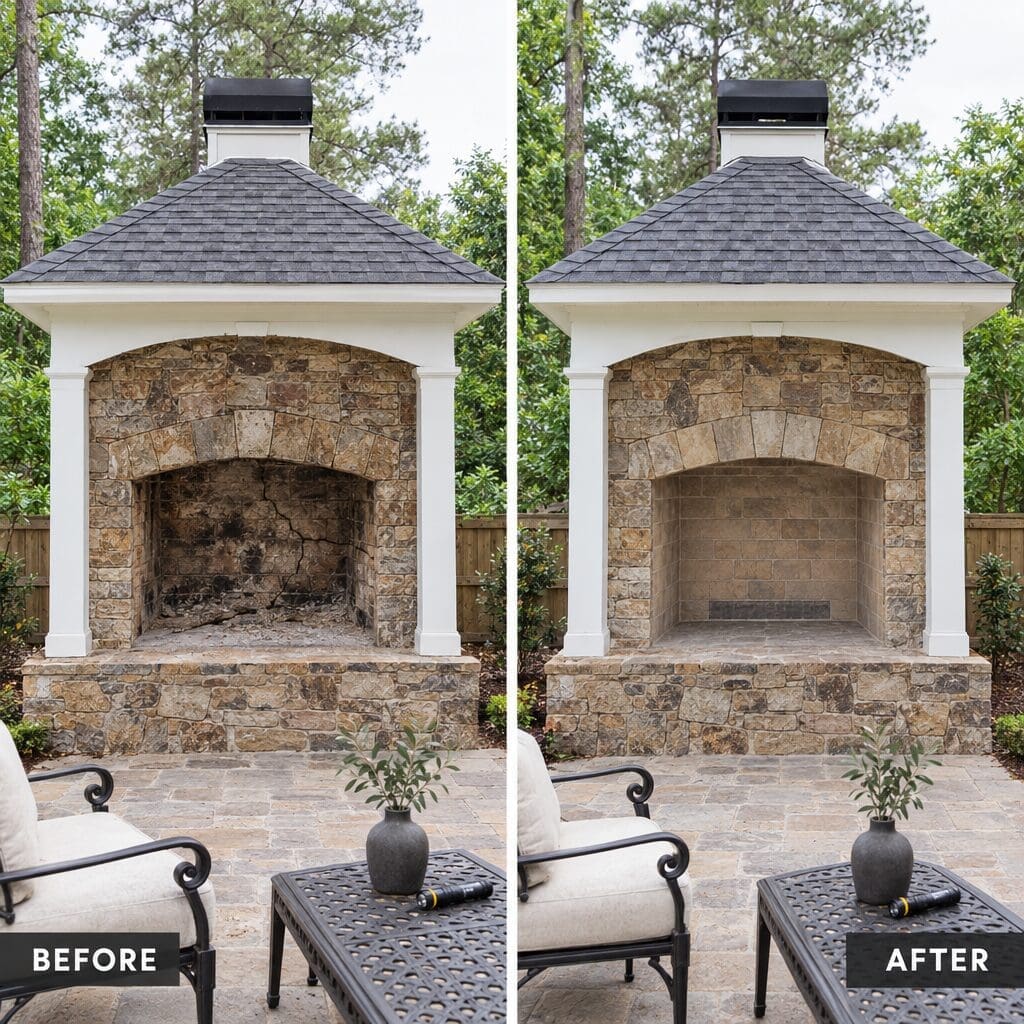
Inspect the fireplace and its surroundings before ordering doors, because structural or fuel-system problems can make a finish upgrade unsafe or incompatible. Look for cracked or loose masonry, spalling, soot buildup, rust, warped metal, deteriorated mortar, and signs that heat has affected the surround or nearby deck and patio materials.
Check the existing fireplace screen, track, frame, latch area, and mounting points for corrosion or movement. A worn fireplace screen may need a simple replacement, while shifting hardware or damaged masonry may require repair before a door installation can proceed. Also inspect for moisture intrusion, especially where rain can reach an uncovered stone fireplace.
Identify whether the feature is wood-burning, gas, or another fuel system. Doors must not obstruct required ventilation, controls, burner components, or safe operation. Pause the order if you find active moisture intrusion, unstable masonry, unusual heat discoloration, or unclear fuel-system requirements. The key verification point is a sound firebox and a clear understanding of how the enclosure interacts with the fuel system.
Inspect masonry, screen, and surrounding surfaces
Inspect firebox joints, mortar, stone, metal, screen tracks, and the surrounding patio or deck for movement, cracking, rust, spalling, and heat discoloration. Check whether the mounting surface can support the selected frame without drilling into damaged material. Treat loose masonry or active water damage as a repair concern rather than a cosmetic detail.
Confirm fuel and ventilation requirements
Confirm the fireplace fuel type and identify vents, controls, burners, dampers, and other components that must remain accessible or unobstructed. Manufacturer requirements should guide the final door selection, particularly for gas fireplaces and custom installations. If the system documentation is missing or unclear, ask a qualified installer to review compatibility before changing the enclosure.
Which outdoor fireplace door materials and styles fit cooler-month entertaining?
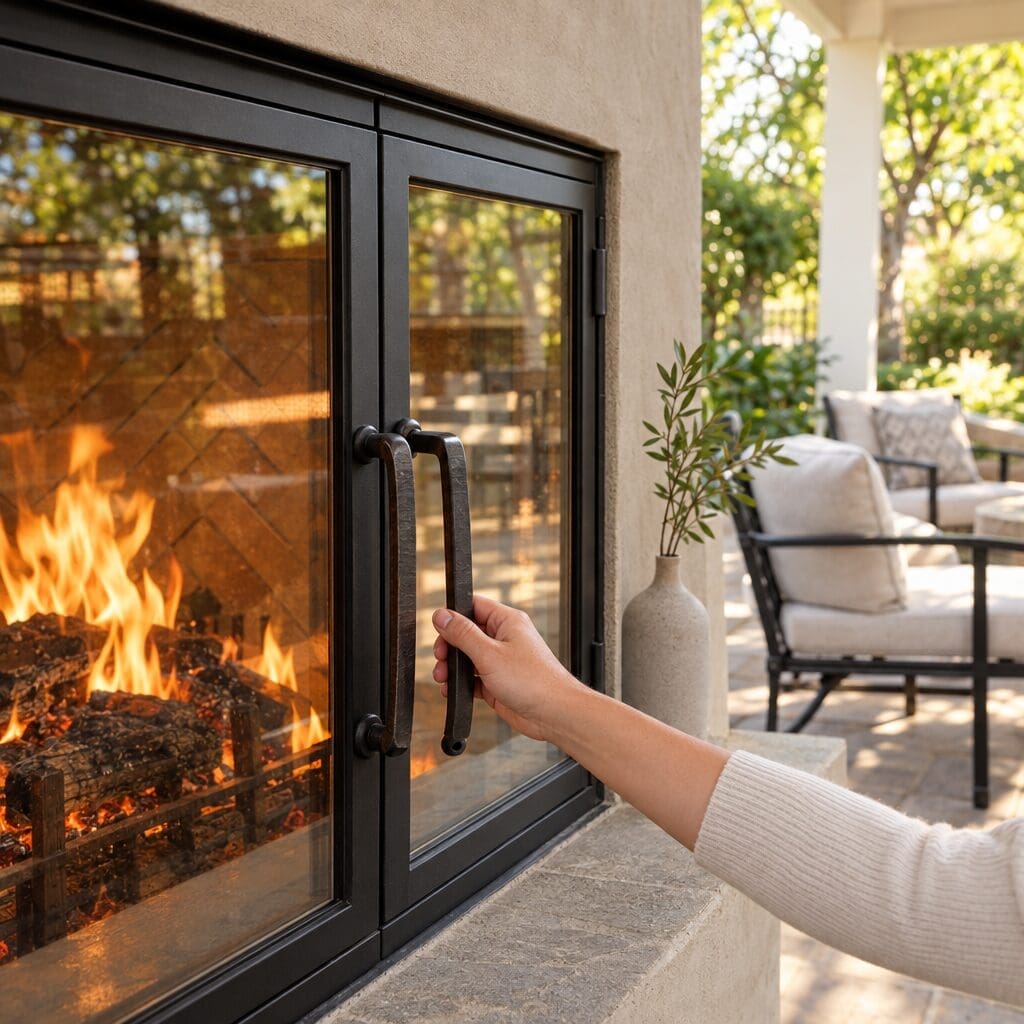
Choose fireplace doors that suit the firebox, weather exposure, and overall outdoor living design rather than selecting a style by appearance alone. Framed glass doors can create a finished focal point, while mesh screens offer a lighter visual treatment and help separate the firebox from the seating area. Simple black metal finishes often coordinate with stonework, grills, and patio furniture, while custom shapes may be necessary for arched, tapered, or corner-mounted openings.
Georgia rain and humidity make corrosion resistance, drainage, and placement worth considering. A covered patio may provide some protection, but an uncovered outdoor fireplace still needs materials and hardware suited to repeated moisture exposure. Think about how often you use the feature, whether water can collect near the frame, and how the finish will look beside a custom deck, stone fireplace, garden, or outdoor kitchen.
Use this decision guide: choose a cosmetic update when the opening, surround, and mounting area are sound; request design or installation help when the fireplace is custom, corner-mounted, exposed to weather, or being integrated into a larger entertaining area. We can help homeowners think through how the fire feature relates to seating, food preparation, walking routes, and the rest of the space.
When does adding fireplace doors become an outdoor fireplace design project?
Adding fireplace doors becomes a broader design project when the opening is irregular, masonry needs repair, the fuel system is unclear, the mounting surface is damaged, or you want to change the fireplace surround. These conditions affect more than the door itself, so the fire feature should be reviewed as part of the full outdoor space.
An outdoor fireplace may need to work alongside a patio, covered patio, custom deck, garden, or outdoor kitchen. Planning those elements together allows the layout to account for clearances, traffic flow, seating, weather exposure, cooking access, and the visual relationship between a stone fireplace and nearby materials. Our team provides professional outdoor fireplace installation tailored to design preferences and budget, along with custom outdoor space and outdoor kitchen design.
For a consultation, prepare opening photos, measurements, fuel information, repair concerns, preferred finish, and a simple description of how you want to entertain. You can also note whether the project involves a Trex deck, covered patio, garden, built-in grill, refrigerator, or other outdoor kitchen features.
Recognize projects that need professional planning
Professional planning is appropriate when the fireplace has an irregular opening, damaged masonry, uncertain ventilation, corroded mounting points, or a surround you want to rebuild. It is also helpful when you are adding a fire feature to a new outdoor living area instead of updating an isolated opening. A site review can connect the door decision with structure, fuel requirements, and the surrounding layout.
Coordinate the fireplace with the deck or patio
Coordinate the fireplace with the deck or patio before finalizing doors, finishes, or seating locations. The fire feature should relate to walking paths, dining areas, covered space, garden planting, and outdoor kitchen access. If a custom deck or patio is part of the plan, share the full layout so the fireplace and its surround are considered alongside the materials and daily use of the space.
How should Georgia homeowners plan the next step for an outdoor fireplace?
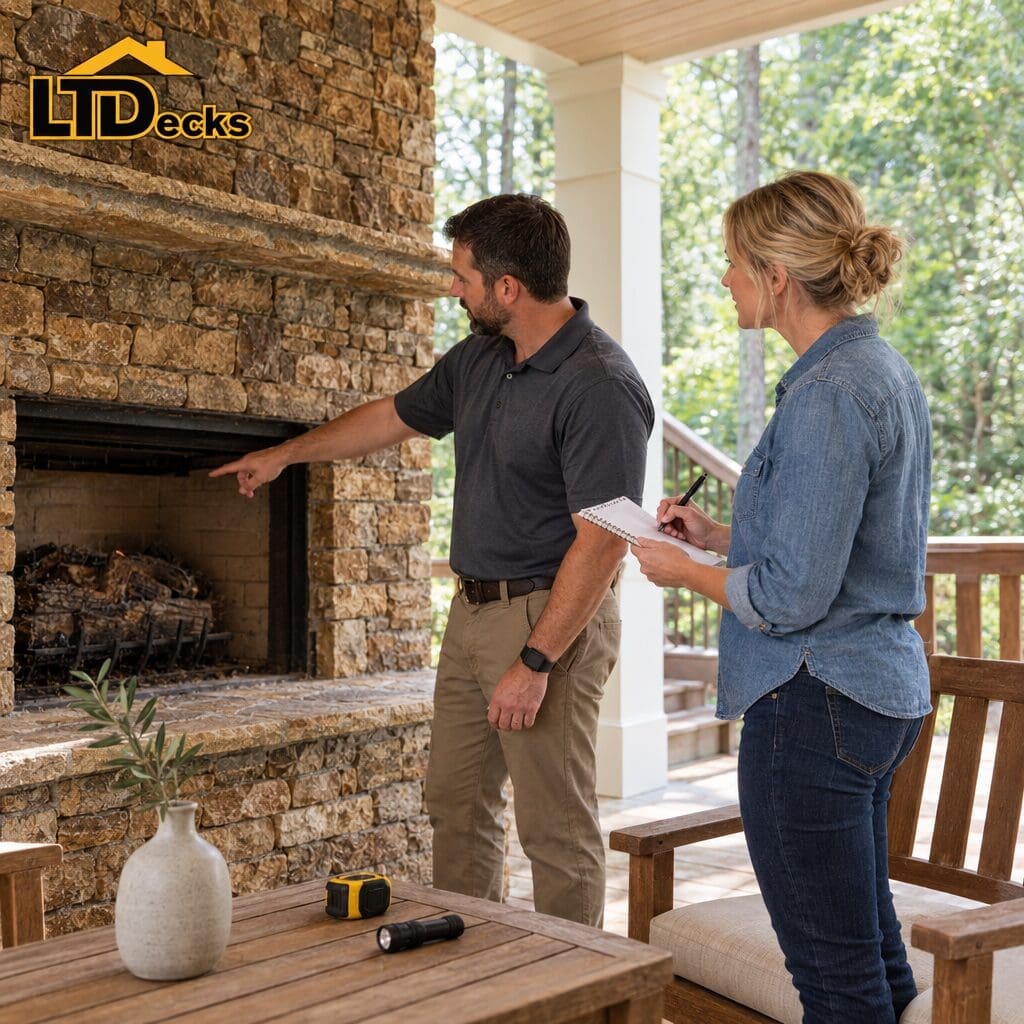
Georgia homeowners can begin with a site-specific review of the fireplace, deck, patio, or planned outdoor living area. Leisure Time Decks works with homeowners across Cobb, DeKalb, Forsyth, Fulton, Gwinnett, and Hall counties, including communities and nearby areas such as Roswell, Alpharetta, Johns Creek, Cumming, East Cobb, Sandy Springs, Buckhead, Decatur, and North Atlanta.
We approach outdoor fireplace questions through personalized design, quality materials, and craftsmanship. Leisure Time Decks is a State Licensed Contractor with 30 years in business, and our team can discuss whether your project calls for fireplace doors, professional installation, a custom outdoor fireplace, or a larger deck and patio plan.
Bring your measurements, photos, fireplace documentation, fuel information, and preferred entertaining layout to the conversation. If the project includes cooking and serving, you can also review our outdoor kitchen design and build services as part of the same outdoor living plan. To discuss your options, contact Leisure Time Decks at +1-404-997-3325.
Frequently Asked Questions
Can I order fireplace doors from one measurement?
No, measure the opening at multiple points and record its shape, depth, mounting area, and smallest usable dimensions. One measurement may miss a tapered or irregular section that prevents a standard door from fitting.
Also photograph the frame, lip, brackets, and surrounding masonry before ordering. If the measurements vary noticeably, ask for compatibility guidance rather than assuming the largest dimension is the correct one.
Do outdoor fireplace doors work with every fuel type?
No, compatibility depends on the fireplace design, fuel system, ventilation, controls, and manufacturer requirements. Wood-burning and gas fireplaces may have different enclosure and access needs.
Confirm that doors will not block required vents, burners, controls, or safe operating components. If the fuel system is unclear, pause the purchase and consult a qualified installer.
Should I replace fireplace doors if the masonry has cracks or moisture damage?
Pause the door purchase until the fireplace condition is evaluated. Cracked masonry, loose joints, corrosion, heat damage, or water intrusion can affect the mounting surface and may require repair first.
A new finish will not correct unstable firebox components or active moisture problems. Address the underlying condition before choosing a door style or installation method.
Can fireplace doors be added to a custom outdoor fireplace on a deck or patio?
They may be possible, but the opening, surround, clearances, mounting surface, and nearby deck or patio materials should be reviewed together. Custom stone and corner-mounted fireplaces often need a closer fit assessment than standard rectangular openings.
A professional installer can help determine whether the door addition works with the existing design and with the way you use the entertaining area.
How do I get help planning an outdoor fireplace in Georgia?
Prepare photos, measurements, fuel information, and your preferred entertaining layout, then contact Leisure Time Decks at +1-404-997-3325. Homeowners in Cobb, DeKalb, Forsyth, Fulton, Gwinnett, and Hall counties can discuss fireplace doors, outdoor fireplace installation, and related outdoor living improvements.
We can help you decide whether the next step is a door update, a repair review, professional installation, or a broader custom deck and patio plan.