
A deck can have attractive furniture and still feel scattered. We use outdoor rugs to give seating and dining furniture a clear visual home, while checking that doors, stairs, drainage, and everyday walking paths remain comfortable.
What layout problem should an outdoor rug solve first?
An outdoor rug should first solve an unclear furniture arrangement, not compensate for a deck that is too small. A rug creates a visual boundary that groups chairs, sofas, coffee tables, or dining furniture into a recognizable outdoor seating area or outdoor dining area.
Spotting undefined seating and dining zones
An undefined zone usually feels unfinished because furniture appears placed individually rather than arranged for a purpose. If chairs face different directions, a coffee table sits outside the conversation area, or dining chairs drift into the main walkway, an outdoor rug can help establish where people should sit, gather, and eat.
Choose the zone before choosing the pattern. A rectangular rug can connect a sofa and chairs, while a dining rug can make the table feel like a dedicated destination instead of an obstacle between the door and stairs.
Separating a furnishing problem from a deck-size problem
A furnishing update makes sense when the deck structure works and walking paths remain open. Test that by checking door swings, stair access, railing clearance, and the space needed to pull out chairs before buying a rug.
A rug cannot add physical floor area. If furniture extends beyond the usable deck, circulation stays tight, or a table blocks a route, discuss deck remodeling or broader outdoor living design rather than selecting a larger rug that creates more crowding.
How do you plan rug placement before buying?

Plan the footprint with a measuring tape, painter’s tape or cardboard, furniture dimensions, paper, and about 30 to 45 minutes at an easy skill level. Measure from fixed points such as doors, stairs, railings, posts, and cooking areas, then record the clearance around each route.
- Measure the zone: Record the usable length and width between fixed features. Verify that the proposed area does not overlap a door swing, stair approach, or required route. The common pitfall is measuring the full deck instead of the area furniture can actually use.
- Mark the rug outline: Use painter’s tape or cardboard to show the exact proposed footprint. Confirm that every corner stays flat and clear of edges, posts, and drainage low spots. Do not choose a rug based only on table dimensions.
- Place furniture: Set the sofa, chairs, table, or dining set inside the outline. Check that major seating can sit on the rug and that dining chairs have room to move. The checkpoint is a complete furniture footprint, including pulled-out chairs.
- Walk every route: Walk from the door to the stairs, cooking area, yard, and other frequently used points. Confirm that people can pass without stepping on chair legs or catching a foot on the rug edge.
- Revise the footprint: Shift the tape or cardboard until the zone feels connected but not crowded. Verify the final arrangement from several approaches, especially the route used most often. Forgetting chair movement space is the most common planning mistake.
Measure the usable deck area
Measure between the features that cannot move, including entry doors, stairs, railings, posts, and built-in cooking areas. Write down both the overall dimensions and the clearance needed for walking, opening doors, and moving chairs.
Use furniture measurements rather than estimates. A table may fit on paper but still make the deck uncomfortable once chairs are pulled out, so include that movement in the usable area.
Mark the proposed rug footprint
Painter’s tape gives you a low-cost, full-scale preview before you purchase outdoor rugs. Mark every corner, place the furniture inside the outline, and look for edges that sit in a doorway, at the top of stairs, or across a natural drainage path.
How do you know it works? Walk the marked zone with chairs occupied and pulled back. If the outline forces a detour or creates a trip point, revise the size or position before shopping.
Which rug size and furniture arrangement make a zone feel intentional?
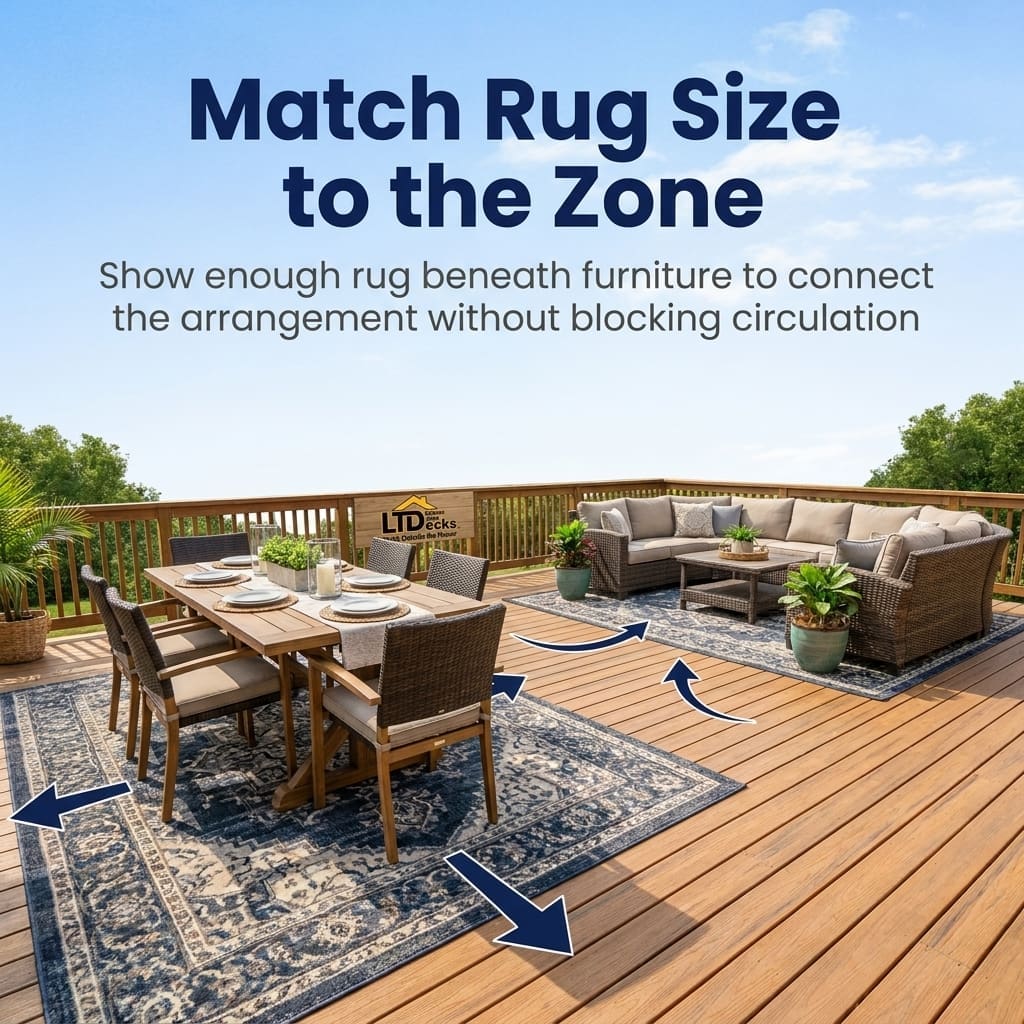
The right rug size connects the furniture without swallowing the deck. For seating, place at least the front legs of major seating on the rug when possible, keeping the arrangement aligned around the conversation area rather than arranging pieces around the rug alone.
For dining, allow chairs to slide out without catching on the rug edge. A rectangular rug usually suits a long dining table, while a square or rounded layout can support a compact conversation area. Leave some visible deck surface around the rug so the boundary feels deliberate and the deck does not appear smaller.
Sizing a seating area
Start with the sofa and primary chairs, then select a footprint that lets at least their front legs rest on the rug. This connects the pieces visually and helps the coffee table sit within the same zone.
Keep the seating aligned toward the intended conversation center. If the rug causes a chair to block a door, stair approach, or main walkway, reduce the arrangement or reconsider the deck layout rather than forcing every piece onto it.
Sizing a dining area
A dining rug needs enough room for chairs to remain supported while guests pull them back to sit down. Measure the table, add the movement space around each side, and test that outline with painter’s tape.
Check the route around the table as well. The table should not push guests toward stairs, doors, railings, or cooking equipment, even if the rug itself fits beneath the furniture.
Using layered boundaries without crowding the deck
Use the rug as one boundary within the larger deck, not as the only guide. The deck surface, furniture orientation, lighting, planters, and nearby cooking or fireplace features can all reinforce where a zone begins and ends.
Leave a visible border of deck around the rug and preserve a clear path between zones. If two rugs nearly touch or overlap a narrow route, simplify the arrangement so the deck remains easy to cross.
What should Georgia homeowners check before leaving an outdoor rug outside?
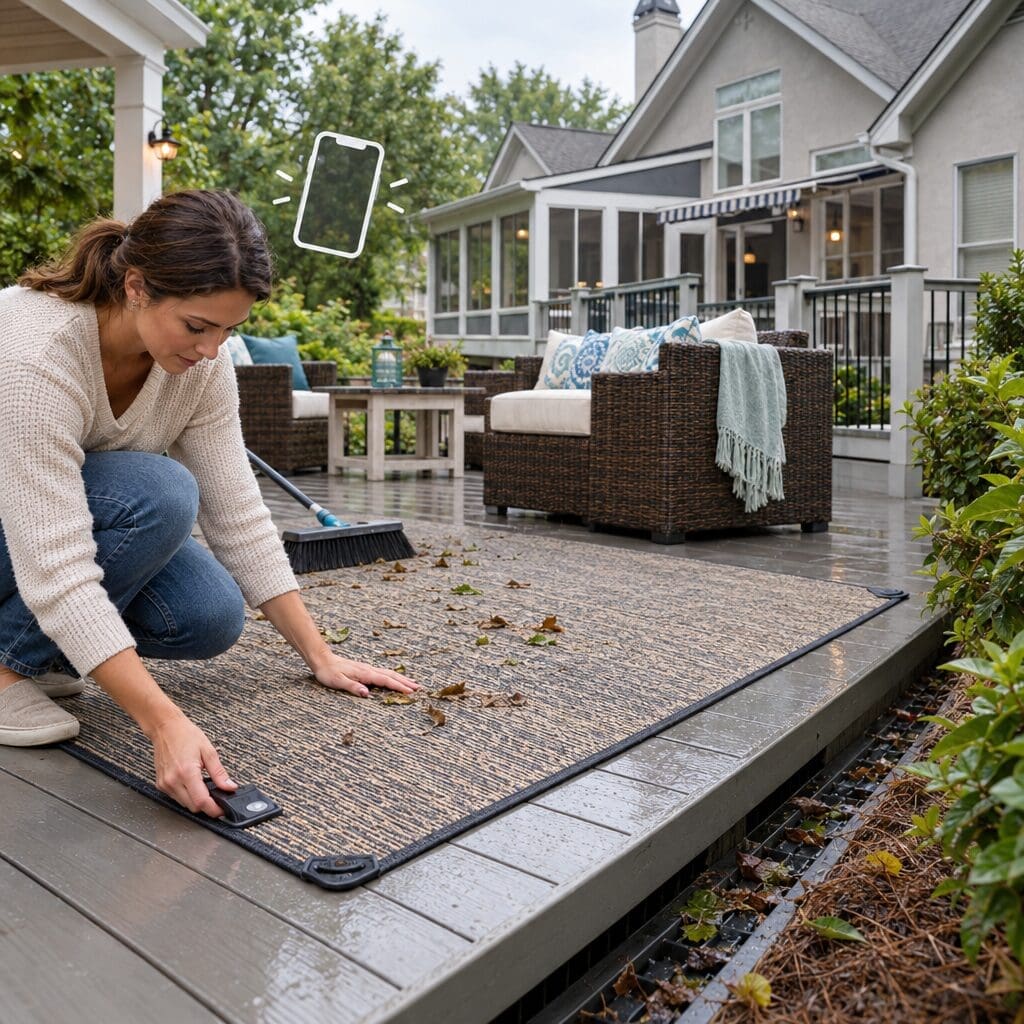
Georgia weather makes airflow, drainage, secure edges, and routine cleaning essential. Secure lightweight rugs against wind, keep every edge flat, and avoid placing a rug where rainwater collects or where it restricts drainage.
Outdoor-rated materials still need ventilation and routine drying. Lift the rug periodically to inspect the deck surface for trapped moisture, mildew, or staining. Remove leaves, pollen, food debris, and standing water promptly, check colorfastness, and follow the manufacturer’s cleaning instructions.
An exposed deck receives more direct rain and sun than a roofed custom porch. A covered porch may offer more control, but rugs and furniture still need ventilation and maintenance.
Wind, moisture, and loose edges
Keep lightweight outdoor rugs secured without creating a new trip hazard or trapping water underneath. Check the edges after windy weather and flatten or reposition them if they curl.
Place rugs away from drainage low spots and inspect the surface after rain. If water remains beneath the rug, lift it so both the rug and deck can dry before returning it to position.
Fading, mildew, and cleaning
Check the manufacturer’s colorfastness and cleaning guidance before placing a rug in full sun or using a cleaning product. Outdoor-rated construction improves suitability, but it does not eliminate fading, mildew, or staining.
Brush away pollen, leaves, and food debris regularly. Lift the rug to look for discoloration or moisture on the deck, then clean and dry both surfaces according to the product instructions.
Seasonal placement on decks and porches
Recheck rug placement after periods of heavy rain, strong wind, and seasonal furniture changes. A roofed custom porch can reduce direct exposure, but it still needs airflow around the rug and furniture.
Move or temporarily remove a rug if the area stays damp, drainage changes, or furniture begins pressing against an edge. Seasonal checks keep the seating and dining boundaries useful instead of creating maintenance problems.
When does an outdoor rug point to a larger deck design change?
An outdoor rug points to a larger deck design issue when circulation conflicts repeat, furniture lacks sufficient depth, stair approaches feel unsafe, or no comfortable dining footprint remains. Those conditions concern the structure and planning of the outdoor living space, not simply the rug.
Leisure Time Decks can discuss custom deck construction, deck remodeling, custom porches, or a broader outdoor living design based on your goals. A plan may also need to coordinate a custom outdoor kitchen with a gas grill, sink, refrigerator, polished granite countertops, and storage, or an outdoor fireplace.
Homeowners in Cobb, DeKalb, Forsyth, Fulton, Gwinnett, and Hall counties can use a design conversation to evaluate how the deck supports intended seating and dining zones. Our approach centers on quality materials, personalized design, and a practical relationship between each feature.
Signs the deck needs remodeling
Consider deck remodeling when chairs repeatedly block doors, the dining table crowds stairs, furniture extends beyond the usable surface, or people must cross through the seating zone to reach the yard. A larger rug will only make those conflicts more visible.
Remodeling can address the underlying footprint, circulation, and zoning questions. The goal is to create enough usable surface for the furniture arrangement you actually want, with the rug added after the paths work.
When a custom porch or outdoor living plan fits better
A custom porch may suit a seating or dining zone that needs more protection from sun and rain. A partially enclosed, roofed porch can give the arrangement a more sheltered setting while preserving a clear route through the outdoor living space.
A broader outdoor living plan helps when seating must coordinate with dining, cooking, entertaining, or yard access. We recommend planning those relationships together before selecting rugs, furniture, or decorative boundaries.
Coordinating rugs with kitchens and fireplaces
Keep rugs positioned so they define seating or dining without interfering with cooking access, appliance doors, fuel connections, or fireplace circulation. Outdoor kitchens and fireplaces need their own working and safety clearances.
Leisure Time Decks designs outdoor kitchens with features such as gas grills, sinks, refrigerators, granite countertops, and storage solutions. We also provide professional outdoor fireplace installation tailored to design preferences and budget, so the rug can support the plan without becoming an obstacle.
How do you maintain clear seating and dining zones after installation?
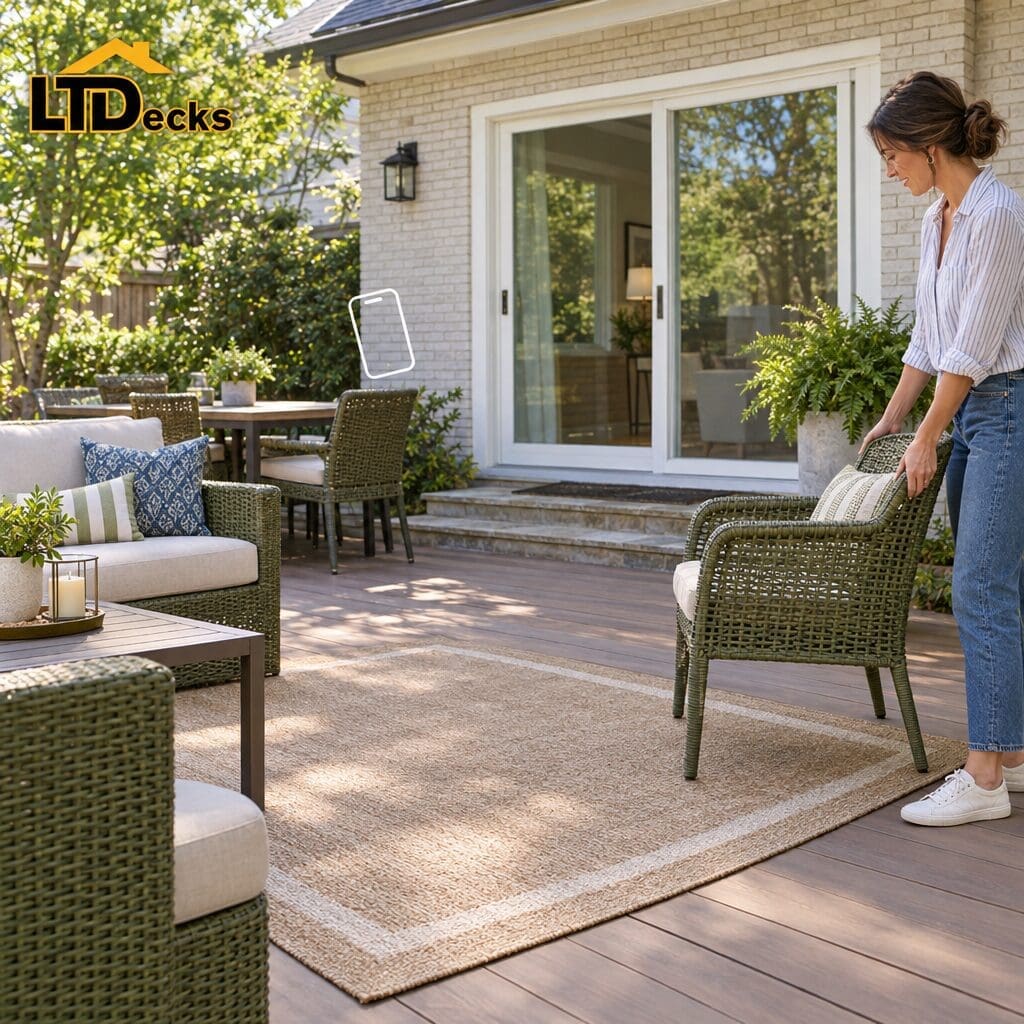
Reset the layout after heavy rain, strong wind, and seasonal furniture changes by checking rug position, chair clearance, door swings, stair access, drainage, and the deck surface. Use furniture feet and, when appropriate, rug pads rated for outdoor use, choosing edge solutions that do not trap water or create trip hazards.
Reassess the arrangement whenever the household adds a grill, outdoor kitchen, fireplace seating, play area, or additional dining furniture. The original rug boundary may need to move as the way you use the deck changes.
For help connecting furnishings to the structure, contact Leisure Time Decks at 404-997-3325 to discuss a custom deck, remodeling project, porch, or outdoor living plan.
Use a simple seasonal reset
At the start of each season, lift the rug, inspect the deck surface, and remove leaves, pollen, food debris, and moisture. Replace it only after the surface and underside are dry.
Then walk the main routes with dining chairs pulled out and seating occupied. Confirm that the rug remains flat, doors and stairs stay clear, and drainage is not restricted after furniture has shifted.
Know when to revise the layout
Revise the layout when a new furniture piece changes circulation, a chair catches the rug edge, or people begin avoiding a route. These small signs show that the zone no longer matches how the household uses the space.
If revisions repeatedly fail because the deck lacks depth or safe access, discuss a design change with our team. You can also review how to design an outdoor living area around the way you relax before your consultation.
Frequently Asked Questions
Can an outdoor rug make a small deck feel more organized?
Yes, a correctly sized rug can visually group furniture and clarify where people should sit or dine. It cannot add physical floor area, so blocked paths, crowded stairs, and tight door clearances still require a layout change or deck evaluation.
Test the footprint with painter’s tape before buying. If the taped boundary makes the deck easier to understand without narrowing circulation, a furnishing update may be enough.
How large should an outdoor rug be under a dining table?
Choose a footprint that keeps the table and chairs supported while guests pull the chairs out and sit down. Measure the table, add clearance for chair movement on every side, and test the full outline with painter’s tape.
Also check the route around the dining area. A rug can fit the table yet still force traffic toward stairs, doors, railings, or cooking equipment.
How do I keep an outdoor rug from becoming damp or moldy in Georgia?
Keep water moving beneath and around the rug, avoid drainage low spots, and lift it regularly to inspect and dry the deck surface. Remove leaves and pollen promptly, follow the manufacturer’s cleaning instructions, and address standing water quickly.
Outdoor-rated materials still need airflow. If the underside or deck remains damp, move the rug temporarily and investigate the drainage or ventilation problem before replacing it.
When should I consider deck remodeling instead of buying a larger outdoor rug?
Consider remodeling when the deck cannot provide safe circulation, adequate furniture depth, usable dining clearance, or comfortable access to doors and stairs. A larger rug cannot correct an undersized or poorly arranged structure.
A deck design discussion can address zoning, furniture placement, and future features such as an outdoor kitchen or fireplace. This creates a better foundation for rugs and furnishings later.