
Deck tiles can refresh a worn deck without changing its footprint when the existing frame is stable, the surface drains well, and the added height will not interfere with doors, stairs, railings, or walkways. If the frame moves, holds water, or shows rot, replacing boards or planning a larger deck remodel is safer than covering the problem.
Should you use deck tiles, replace the boards, or remodel the deck?
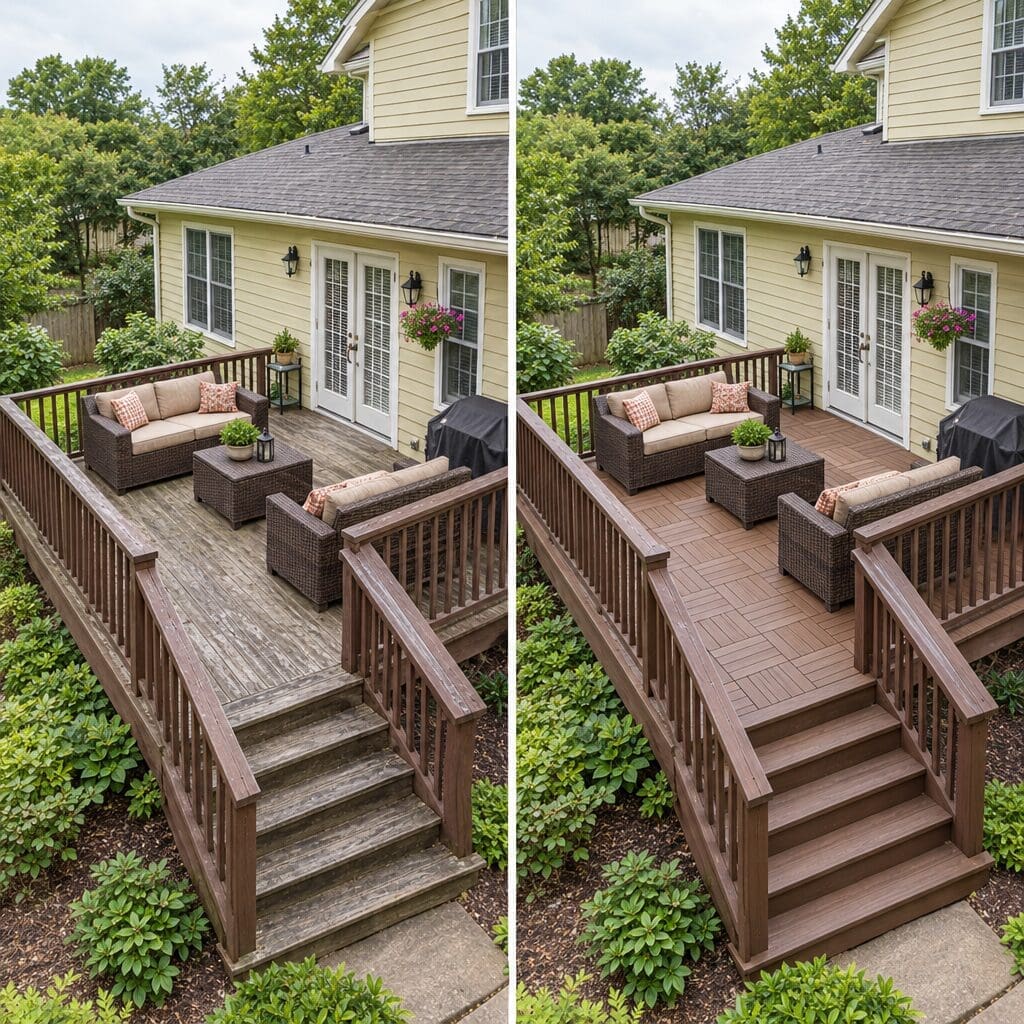
The right choice depends on whether you want a surface refresh, a new deck surface, or a different outdoor space. If your goal is to keep the current shape and improve the appearance, deck tiles may be worth evaluating. If the frame is sound but the decking boards are worn, board replacement often gives you a more direct and durable surface renewal. A broader remodel fits goals such as new stairs, screening, privacy, shade, or a better connection to the yard.
Set aside about one to two hours for a careful inspection. Gather a flashlight, tape measure, level, screwdriver, and a moisture-resistant notepad or phone camera. We would rate this evaluation as moderate difficulty because you are checking more than the visible boards. You also need to observe movement, moisture, attachment points, and finished-height conflicts.
Deck tiles only make sense when the supporting frame and surface can safely carry them. Pause before buying materials if you find noticeable movement, soft or rotten wood, unstable railings, water-trapping areas, or a threshold and stair conflict. Covering a problem can make later inspection and repairs harder, while a professional assessment can clarify whether the existing footprint is worth preserving.
How can you tell whether the existing deck can support deck tiles?
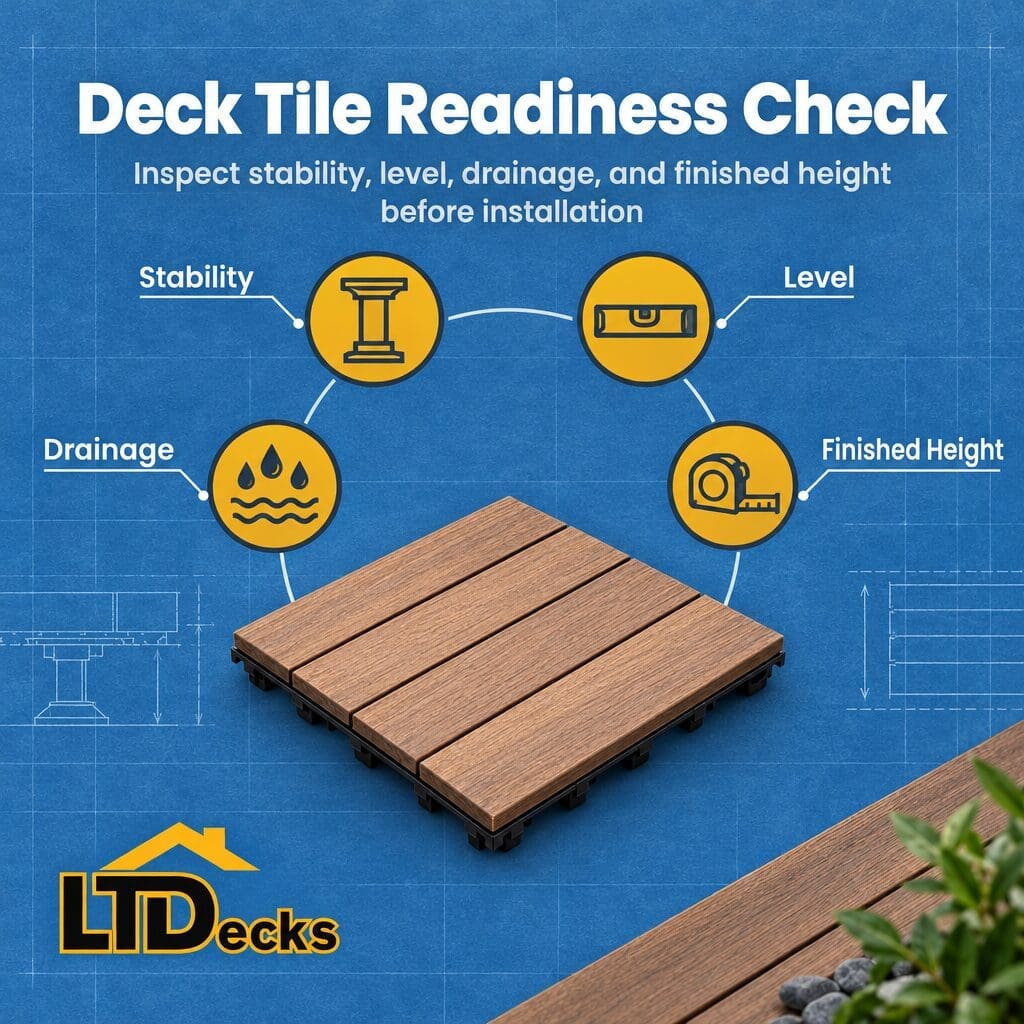
The deck should feel stable, remain reasonably level, and give water a clear path away from the structure before you consider deck tiles. Start at the top and work downward: inspect the decking boards and their attachment, then examine the joists, beams, posts, ledger connection, and visible fasteners. Look closely beneath planters, furniture, rugs, and edges where leaves or moisture may remain trapped.
Watch for soft wood, widening cracks, sagging, noticeable bounce, loose connections, water damage, or boards that shift under normal foot pressure. Push each railing section carefully; a railing that moves may need attention before any surface treatment. Photograph questionable areas so you can compare them later or discuss them with a qualified deck professional.
Inspect the frame before the surface
Inspecting the frame first prevents a new surface from hiding a structural concern. Use the flashlight to check joists, beams, posts, and the ledger area for decay, splitting, corrosion, loose hardware, or damp material that does not dry between weather events. A stable-looking top surface does not prove that the framing underneath is sound, so arrange a professional assessment when you cannot confidently judge the condition.
Check height, drainage, and access points
Measure the proposed tile thickness against door thresholds, stair nosings, railing heights, door swings, and transitions to patios or walkways. Confirm that water can drain beneath or around the system instead of collecting against the house or trapping debris. The verification checkpoint is simple: the deck should feel stable, water should have a drainage path, and the finished height should not create a trip or access problem.
What is the safest way to compare deck tiles with replacement decking?
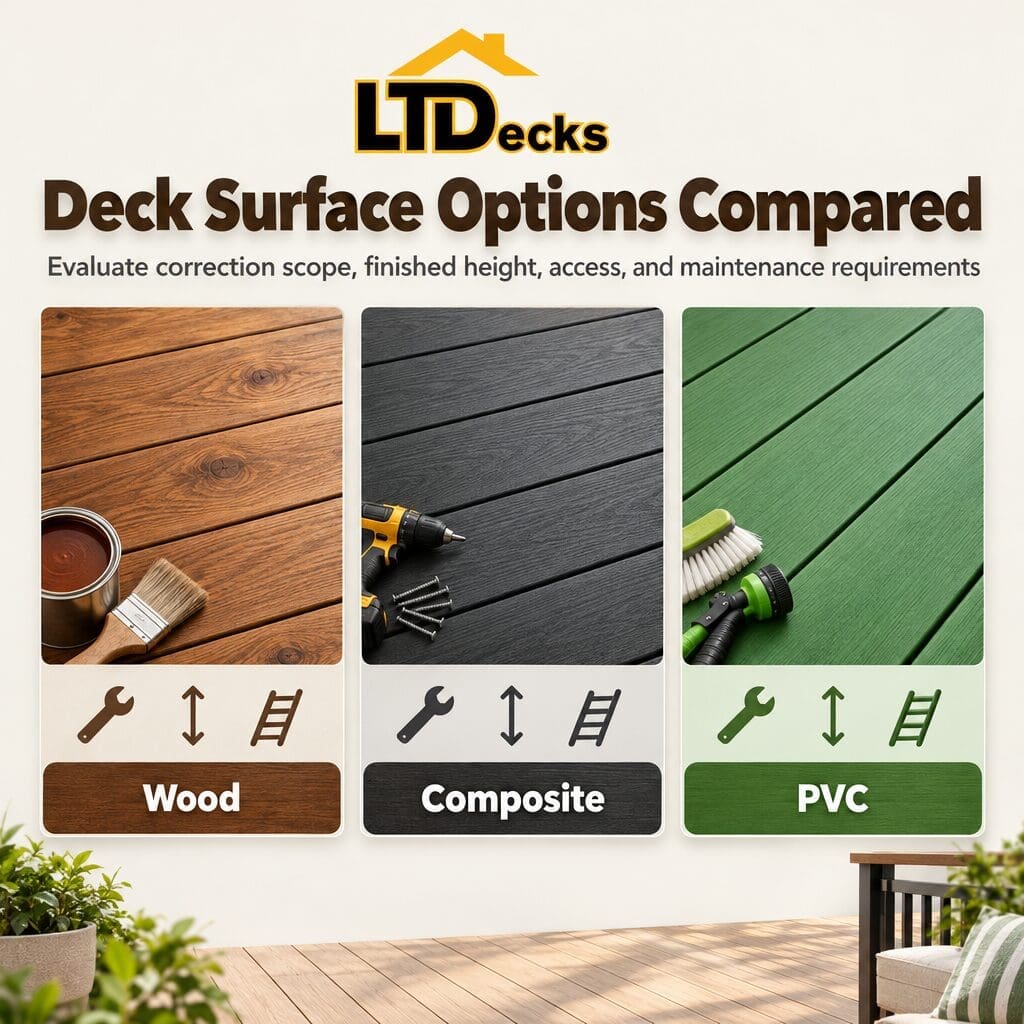
Compare deck tiles and replacement decking by asking what each option can correct, how it changes the finished height, and how easily the deck can be inspected later. Interlocking deck tiles can create a refreshed visible surface with limited footprint changes, but they cannot repair a failing frame, correct poor slope, redesign stairs, or solve drainage that already fails.
- Structural scope: Deck tiles usually address the surface only. Replacement decking also remains surface-focused, but it can remove tired boards and expose the frame for inspection during the work.
- Appearance: Tiles offer modular patterns and borders, while new decking provides a more integrated field of boards. Composite decking and custom railing can also be coordinated as part of a design plan.
- Installation constraints: Tiles need a suitable, stable base and careful edge treatment. Replacement boards require compatible framing, correct attachment, and attention to spacing.
- Maintenance and drainage: Tiles must allow water and debris to move as intended and may need occasional removal for inspection. New boards still require a drainage-conscious layout and ongoing cleaning.
- Disruption: A surface overlay may limit visible changes, while board replacement can involve removing much of the existing deck surface. The actual disruption depends on condition and access.
- Underlying defects: Neither option should be used to conceal rotten framing, unstable railings, or unsafe stairs. Replacement decking is often the more direct path when the frame is sound but the boards are worn.
Material and finish decisions matter as much as the installation method. We can help homeowners think through composite decking, railing profiles, color relationships, and edge transitions without assuming that one product suits every property. The safest choice is the one that matches the frame condition, drainage, access needs, and the way you use the deck.
When does a larger deck remodel solve more than a surface refresh?
A larger deck remodel is the better answer when the problem involves circulation, access, privacy, shade, screening, or how the space supports daily life. Deck tiles can change the surface, but they cannot add stairs, create a screened porch, improve an awkward connection to the yard, or make room for an outdoor kitchen or fireplace.
Consider a broader plan if you want additional stairs, a pergola, gazebo, screen porch, outdoor kitchen, outdoor fireplace, fire pit, retaining wall, or stone patio connection. These features may work together more effectively when planned as one outdoor-living design rather than added around a surface product. You can review ideas for arranging the space around your habits in our outdoor living design guide.
Match the project to the outdoor-living goal
Choose a surface refresh when the deck already supports the way you dine, relax, and entertain and only the visible finish needs attention. Choose remodeling when you need safer access, better circulation, screening, shade, cooking space, or a stronger connection between the house and yard. Our team can help separate a cosmetic concern from a layout problem before you commit to materials.
Account for Georgia site conditions and local approvals
Georgia humidity, heavy rain, shaded areas, seasonal moisture, drainage patterns, and soil movement can affect both the surface and the condition beneath it. Before changing the structure or footprint, confirm applicable permit, setback, structural, and railing requirements with the local authority. Leisure Time Decks works with homeowners across Cobb, DeKalb, Forsyth, Fulton, Gwinnett, and Hall counties who want a personalized plan instead of a surface-only decision.
What should you ask before choosing a deck tile installation?
Ask how the proposed deck tile system will handle condition, height, drainage, access, maintenance, and future inspection before you approve the work. A useful conversation should address whether tiles can be removed later, how edges will be finished, whether the base needs leveling or preparation, and how water will move beneath or around the system.
Bring these questions to the design discussion: Will the added thickness affect the door, stairs, railing, or walkway? Can individual tiles be lifted for inspection or repair? What happens at the perimeter and at changes in elevation? How will the system respond to leaves, furniture, standing water, and routine cleaning? What warranty terms apply, and what maintenance does the manufacturer require?
A small sample or mock-up can reveal issues that a catalog image cannot. Check color, texture, walking comfort, border transitions, and how the refreshed surface relates to the house. Then document the existing deck, define how you want to use it, compare tile and board options, request a design conversation, and confirm the scope in writing before work begins.
How can a design consultation turn a worn deck into a better outdoor space?

A design consultation connects the surface decision to the way you want to dine, entertain, relax, cook, add shade, screen the space, or move more safely from the home. Leisure Time Decks brings custom deck, porch, and outdoor-space experience to the question of whether a limited refresh or a broader plan fits your property and goals.
Our stated focus is quality materials, personalized design, craftsmanship, and customer service. We are a State Licensed Contractor and have been in business for 30 years, and our approved reputation information includes a 4.9 rating from 21 reviews. Those details do not replace a site-specific evaluation, but they reflect the kind of relationship and workmanship homeowners often want during a deck remodeling decision.
We can discuss custom decks, screen porches, pergolas, outdoor kitchens, outdoor fireplaces, fire pits, retaining walls, and stone patios when those features belong in the larger plan. To talk through your existing deck, desired footprint, and possible next steps, contact Leisure Time Decks or call +1 404-997-3325. We are happy to start with the condition you can see and the outdoor space you want to create.
Frequently Asked Questions
Are deck tiles a good choice for a worn deck?
Deck tiles can work when the existing deck is structurally sound, reasonably level, well drained, and able to accommodate the added finished height. They refresh the surface, but they do not repair rotten framing, unstable connections, poor drainage, unsafe stairs, or moving railings.
How do deck tiles compare with replacing the decking boards?
Deck tiles may limit the visible scope of a refresh, while replacing decking offers a more direct way to renew the surface when the frame is sound. Compare finished height, drainage, edge finishing, maintenance, inspection access, appearance, and the condition of the current boards before choosing.
Can deck tiles be installed over any existing deck?
No, the base must be stable, suitable for the tile system, and free from conditions that trap water or create movement. Check joists, beams, posts, fasteners, board attachment, level, thresholds, stairs, and railings before selecting a product.
When should I choose a larger deck remodel instead?
Choose a larger remodel when you need different circulation, additional stairs, screening, a porch, shade, improved railings, or a connection to an outdoor kitchen, fireplace, patio, or other outdoor-living feature. A surface product cannot solve layout or structural needs.
How do I get started with refreshing my existing deck?
Photograph the deck, note movement or moisture concerns, measure thresholds and stairs, and write down how you want to use the space. Then contact Leisure Time Decks through the website or at +1 404-997-3325 to discuss whether deck tiles, replacement decking, or a custom remodel best fits the property.