
Choosing a deck material in Georgia means balancing intense sun, heavy rain, humidity, temperature changes, maintenance, and the way you plan to use the space. We recommend evaluating the site first, then comparing exact wood, composite, and PVC products with a builder who can address drainage, framing, stairs, railings, and the connection to your home.
What should you inspect before choosing a deck material in Georgia?
Select a material only after reviewing the conditions that will affect its performance. A sunny, uncovered deck in Cobb County may experience a different combination of heat and fading than a shaded deck beneath mature trees in Hall County. Frequent rain and humidity also make water movement, ventilation, and framing details central to the material decision.
Start with the site, not the sample board
The right first step is a site review, because even a premium decking product can perform poorly when water cannot drain or the framing remains damp. We look at sun exposure, shade, standing water, slope, soil, vegetation, access for construction, existing structures, stairs, and the deck’s connection to the house.
The ledger and flashing deserve particular attention where a deck meets the home. A material sample cannot correct poor drainage, inadequate clearance, or a connection that has not been properly evaluated.
Record the conditions that affect performance
Take photos from the yard and house, note where rainwater travels, and identify areas that stay wet after storms. Also record whether the deck will sit near soil, retaining walls, dense plantings, or other features that may limit airflow.
Use this practical checklist before discussing materials:
- Sun and shade: Note direct afternoon sun, tree cover, and areas that may retain moisture.
- Water flow: Identify downspouts, low spots, runoff paths, and standing water.
- Soil and footings: Consider slope, soil conditions, and foundation needs.
- House connection: Inspect the ledger area, flashing, doors, and transition into the home.
- Access: Check how workers and materials can reach the yard.
- Stairs and railings: Note their location, height, traffic pattern, and intended use.
- Intended use: List dining, entertaining, pets, children, shade, and furniture needs.
- Local project requirements: Ask which permits or other requirements apply.
How do composite, PVC, and wood decking compare in Georgia weather?
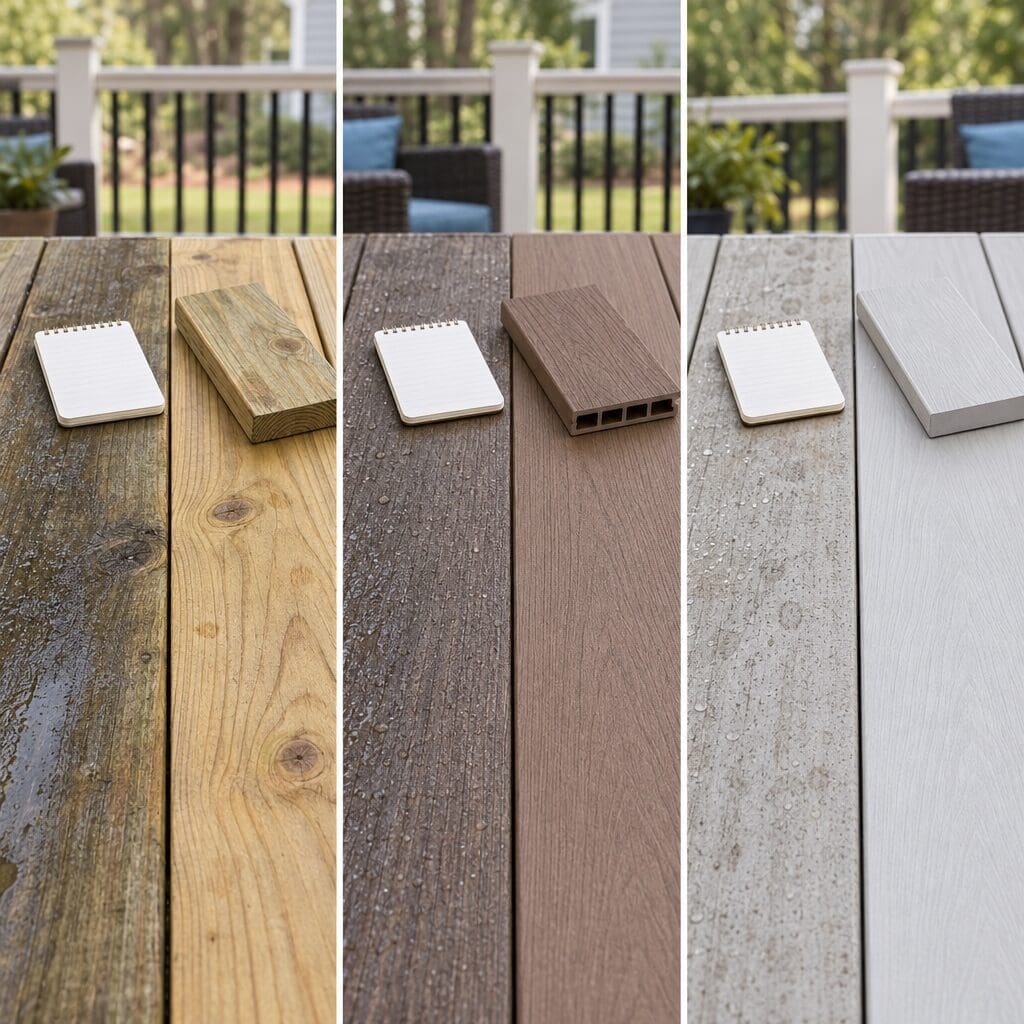
Wood, composite, and PVC can all suit a Georgia deck, but the best choice depends on heat exposure, moisture, appearance, maintenance, and the exact product specifications. We recommend comparing physical samples in direct sun and shade rather than relying on a material category alone.
Compare heat, moisture, appearance, and maintenance
Pressure-treated wood often offers a familiar appearance and flexibility for custom designs, but it needs cleaning, inspection, and periodic sealing or staining in humid conditions. Naturally durable wood can provide a distinctive look and may be refinished, while still requiring an upkeep plan and attention to moisture.
Composite decking can reduce routine staining and refinishing, but products vary in color change, texture, heat retention, expansion behavior, and fastening requirements. PVC decking may resist moisture well and offer low-maintenance surfaces, yet its appearance, temperature underfoot, movement, and installation requirements also differ by manufacturer.
Match the material to how you use the space
Choose based on daily use rather than appearance alone. A deck used for barefoot lounging may require closer attention to surface temperature and texture, while a dining area may place greater emphasis on stability, cleaning, and furniture movement.
Ask about available colors, trim, fasteners, replacement boards, wet-condition performance, and cleaning products. Comparing the exact board, railing, and trim system helps prevent surprises after construction, especially when a design includes stairs, privacy features, or a covered section.
Which construction details protect a Georgia deck from rain and humidity?
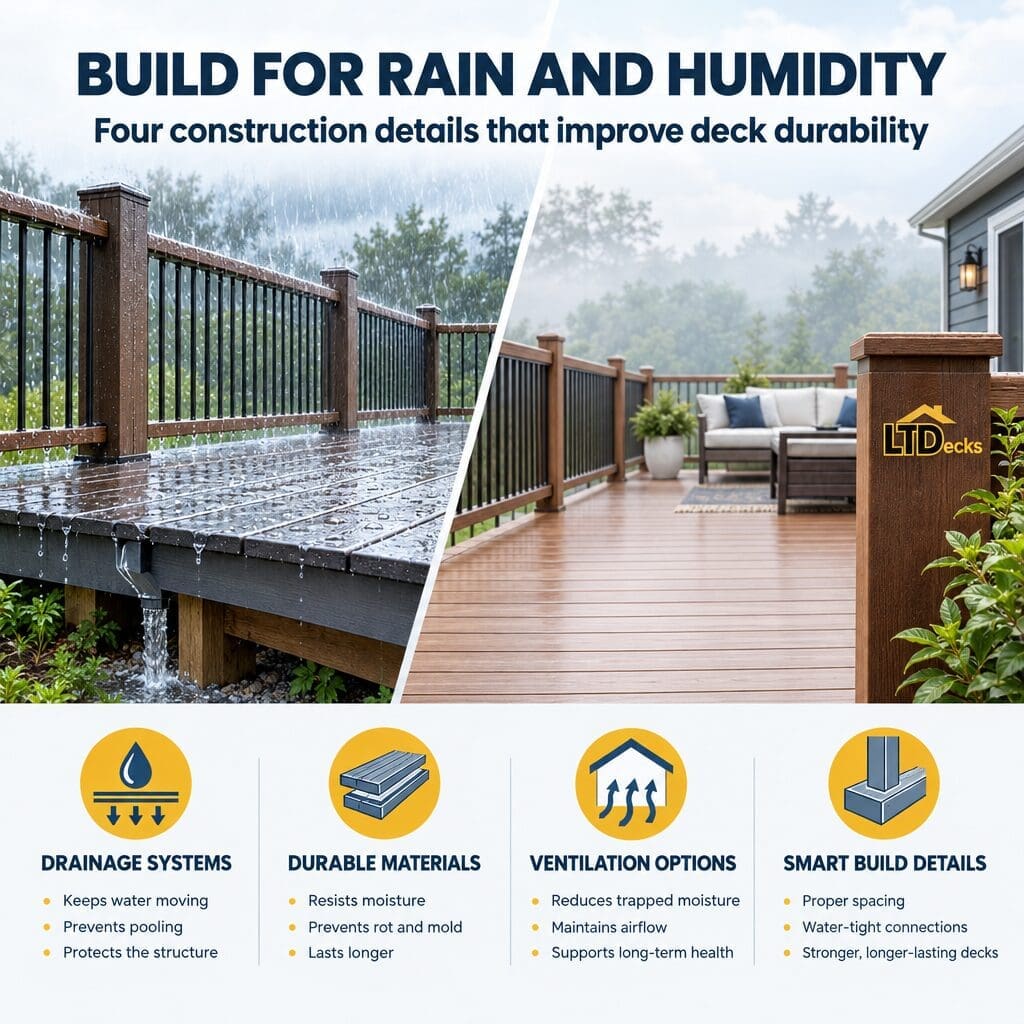
Water management and sound framing details protect a Georgia deck more reliably than a decking label alone. Drainage, flashing, ledger attachment, joist protection, board spacing, ventilation, and clearance from soil or vegetation all influence how quickly moisture leaves the structure.
Control water before it reaches the framing
Ask how rain will move across and away from the deck, especially near the house, stairs, and covered areas. Proper flashing and ledger attachment help protect the house connection, while joist protection and suitable spacing can reduce prolonged moisture exposure.
Downspouts, grading, nearby landscaping, and low areas may require attention before boards are installed. Ask who evaluates existing framing and what conditions would require a change in scope, rather than assuming new decking will solve an underlying drainage problem.
Plan for movement, airflow, and safe transitions
Deck boards expand and contract, so the selected product must be installed with the manufacturer’s spacing and fastening requirements. Ventilation beneath and around the deck, adequate clearance from soil, and room around vegetation help the framing dry after rain.
Stairs, railings, door thresholds, and transitions into a porch or patio also need a clear plan. Before work begins, ask: What water-management details will you use? How will you confirm the house connection? Which fasteners match the boards? How will stairs and railings be supported? What maintenance does this product require?
What does deck construction include, and why can the cost vary?
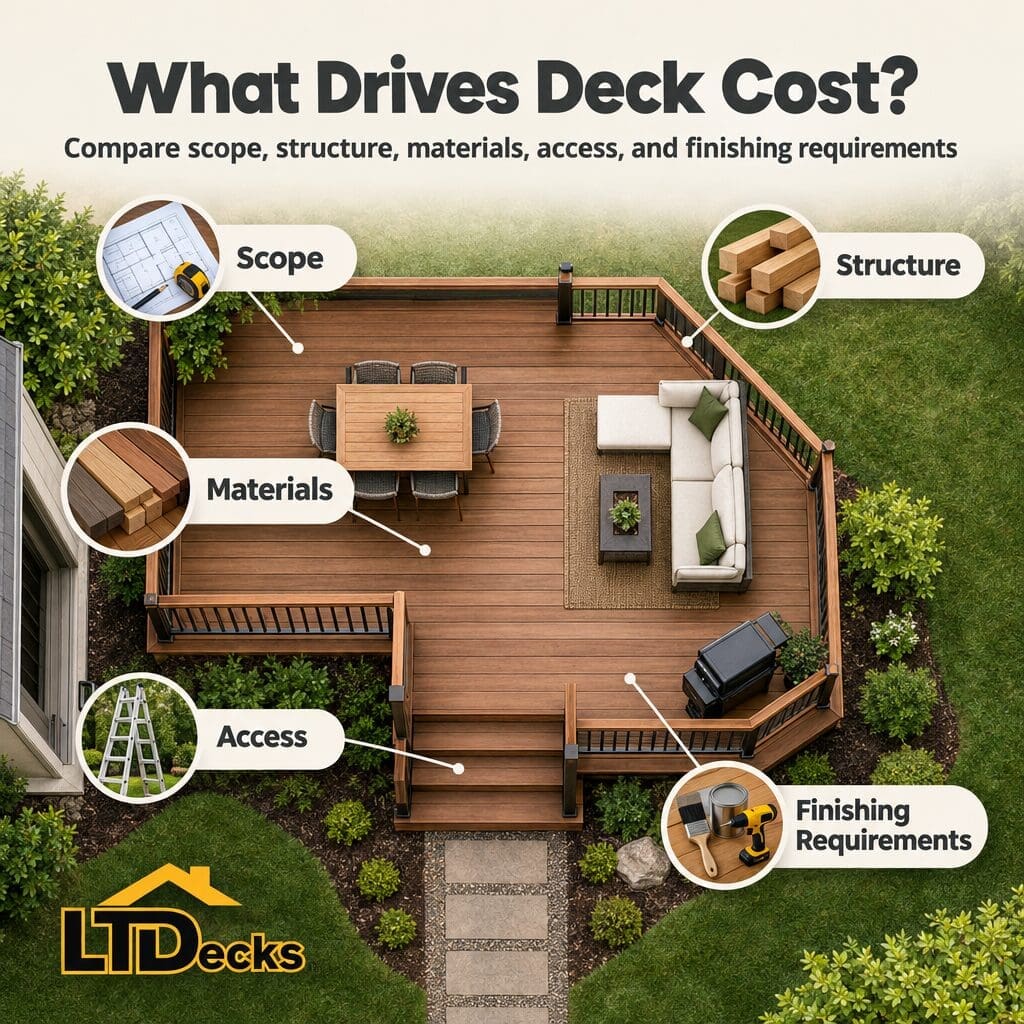
Deck construction may include design consultation, site review, layout, demolition or preparation, footings, framing, decking, stairs, railings, drainage details, finishing work, and cleanup, depending on the project. The full cost reflects this scope rather than the price of boards alone.
Define the scope before comparing proposals
Request an itemized scope that identifies the decking and framing materials, construction details, preparation work, stairs, railings, exclusions, and any site or local requirements. This makes proposals easier to compare and shows whether demolition, grading, drainage work, or disposal is included.
Clarify how the plan addresses the house connection, existing framing, access, and transitions to patios or porches. A written scope also gives you a useful place to record maintenance expectations and product information.
Separate material price from project complexity
Deck size and height, foundation needs, framing condition, site access, grading, demolition, stairs, railings, lighting, privacy features, and design complexity can all change the project cost. Connected outdoor-living additions, such as an outdoor kitchen or fireplace, add separate planning and construction considerations.
A lower material price does not automatically create a lower total project cost if the site needs extensive preparation or the design requires complicated transitions. We recommend comparing the complete plan, not just a per-board or material number.
How can you prepare for a custom deck conversation with a Georgia builder?
Prepare for a builder conversation by documenting the property, defining how you will use the deck, and ranking the features that matter most. This gives the design discussion a practical starting point and helps connect a preferred material with the site’s actual conditions.
Bring useful information to the first discussion
Photograph the yard, house connection, doors, stairs, drainage areas, and nearby structures. Measure the available area if possible, mark known utilities or wet spots, and collect inspiration showing preferred colors, layouts, shade, railings, and privacy features.
Write down whether you expect dining, grilling, entertaining, quiet sitting, pet access, or children’s play. Also ask about cleaning products, sealing, warranty terms for the selected product, replacement boards, railing options, shade, and future additions.
Move from material preference to a workable plan
Leisure Time Decks provides custom decks and deck remodeling along with screen porches, front porches, pergolas, gazebos, outdoor kitchens, outdoor fireplaces, fire pits, retaining walls, and stone patios. Those options can matter when a deck needs to connect with a broader outdoor-living plan.
Leisure Time Decks is listed as a general contractor serving the Suwanee area and may be a local starting point for homeowners seeking personalized design and quality materials. Communities such as Suwanee, Cumming, Roswell, Alpharetta, Decatur, Sandy Springs, and surrounding Georgia counties should confirm location and project fit directly with the company.
When should a homeowner choose a contractor instead of selecting materials alone?
Homeowners can narrow their material preferences independently, but site drainage, improved framing, house connections, stairs, structural changes, and local requirements deserve professional review. The material decision becomes more useful when it is tied to a complete plan for water, movement, access, safety, and maintenance.
Recognize decisions that require site judgment
Planning is incomplete when no one inspects the site, discusses water flow, identifies exact material specifications, or explains the stair and railing scope. Other warning signs include no maintenance discussion and a price that omits preparation, demolition, grading, or the condition of existing framing.
These gaps matter because the boards are only one part of the deck system. A careful review can identify whether the preferred product, layout, and construction details fit the property.
Use the next conversation to verify fit
Leisure Time Decks emphasizes personalized service and craftsmanship and is listed as a general contractor serving the Suwanee area. We encourage you to bring your photos, intended uses, material questions, and concerns about drainage or the house connection to the discussion.
To discuss your property and the information needed for a custom deck plan, contact Leisure Time Decks or call 404-997-3325. Our team can help you frame the material conversation around Georgia weather and your outdoor-living goals.
Frequently Asked Questions
Which deck material is best for Georgia’s heat, rain, and humidity?
There is no single best material for every Georgia property. Compare pressure-treated wood, naturally durable wood, composite decking, and PVC decking based on sun exposure, drainage, ventilation, maintenance preferences, appearance, and exact product specifications.
A site review should guide the final choice because shade, standing water, framing, and the house connection can affect performance as much as the decking surface.
How much does deck construction cost in Georgia?
Deck construction costs vary with size, height, material, framing, stairs, railings, site access, demolition, drainage, and design complexity. Two properties with the same deck size can require very different preparation.
Request an itemized custom scope instead of relying on a universal price. The scope should identify materials, preparation, construction details, exclusions, and any connected outdoor-living features.
What is included in deck construction?
Depending on the project, construction can include design, site review, preparation, footings, framing, decking, stairs, railings, drainage details, finishing work, and cleanup. Ask the contractor to identify included work and exclusions in writing.
You should also confirm the exact decking system, fasteners, railing materials, maintenance requirements, and how the plan handles the house connection.
Do you serve Lilburn and surrounding Georgia communities?
Leisure Time Decks serves Georgia communities and lists locations including Suwanee, Cumming, Roswell, Alpharetta, Decatur, Sandy Springs, and surrounding areas. Homeowners in Lilburn, Cobb County, DeKalb County, Forsyth County, Fulton County, Gwinnett County, or Hall County should confirm service availability and project fit directly.
Sharing your address, property conditions, and intended project can help the company determine whether the conversation is a suitable next step.
How do I get started choosing a deck material?
Photograph the site, note sun and drainage conditions, define how you will use the deck, gather material preferences, and prepare questions about maintenance and construction details. Then contact Leisure Time Decks through its website or at 404-997-3325.
Bring your preferred colors and examples, but remain open to adjusting the material after the site, framing, water management, stairs, and future outdoor-living plans have been reviewed.